Fit and secure heel hold matter more than a comfort label. Try shoes with your normal socks and leave room for toes, then check weight, grip and the return terms.
Shopping note: the retailer links in this guide are ordinary links and do not currently earn us a commission. Read our Affiliate Disclosure.
In this guide
A day in town can involve much more walking than expected: the station platform, a few shops, an exhibition and the long way back after missing a bus. Shoes that felt pleasant for two minutes on a carpet may become distracting by lunchtime. Choosing well means connecting the shoe to your usual routes, rather than relying on appearance or a broad promise of comfort.
Describe your most common route
Think about the surfaces you encounter and how long you normally remain on your feet. Smooth office floors, uneven pavements and wet station steps ask different things of a sole. You may need a tidy everyday trainer rather than a heavy walking boot, but a very smooth fashion sole can be inconvenient in rain.
Consider whether the shoes need to fit under office trousers, accompany dresses or live beside the door for errands. One pair can cover several jobs, although expecting it to handle formal events and muddy country paths may create an unnecessary compromise.
Check length, width and heel hold together
Try both shoes with the socks you will actually wear. Stand up, walk and turn, then notice whether your toes can spread without pressing against the upper. A size number cannot tell you whether the shape matches your foot. Different models from the same brand may fit differently.
Your heel should feel secure without a tight collar rubbing it. If you must curl your toes to retain a slip-on, the shape or fastening may be wrong. Do not assume a painful pressure point will disappear after breaking in. Persistent foot pain deserves appropriate professional advice, not another speculative purchase.
Understand cushioning and stability
Soft foam can feel appealing in a shop, but softness alone does not describe the whole shoe. Notice whether your foot feels supported when turning and whether the sole bends in a comfortable place as you step. A thicker sole can add cushioning while also adding bulk or changing how the shoe feels on stairs.
Laces offer adjustment across the foot and can accommodate a different sock thickness. A slip-on saves time but provides less control over fit. Neither design is universally superior; choose the arrangement that stays comfortable during your usual movements.
Compare everyday options
| Style | Practical advantage | Possible compromise |
|---|---|---|
| Everyday trainer | Adjustable fit and casual versatility | May not suit a formal workplace |
| Leather lace-up | Tidy appearance and structure | Weight and maintenance vary |
| Lightweight walking shoe | Designed around outdoor routes | Can look bulky with smarter clothes |
| Loafer | Easy to put on | Heel hold is highly shape dependent |
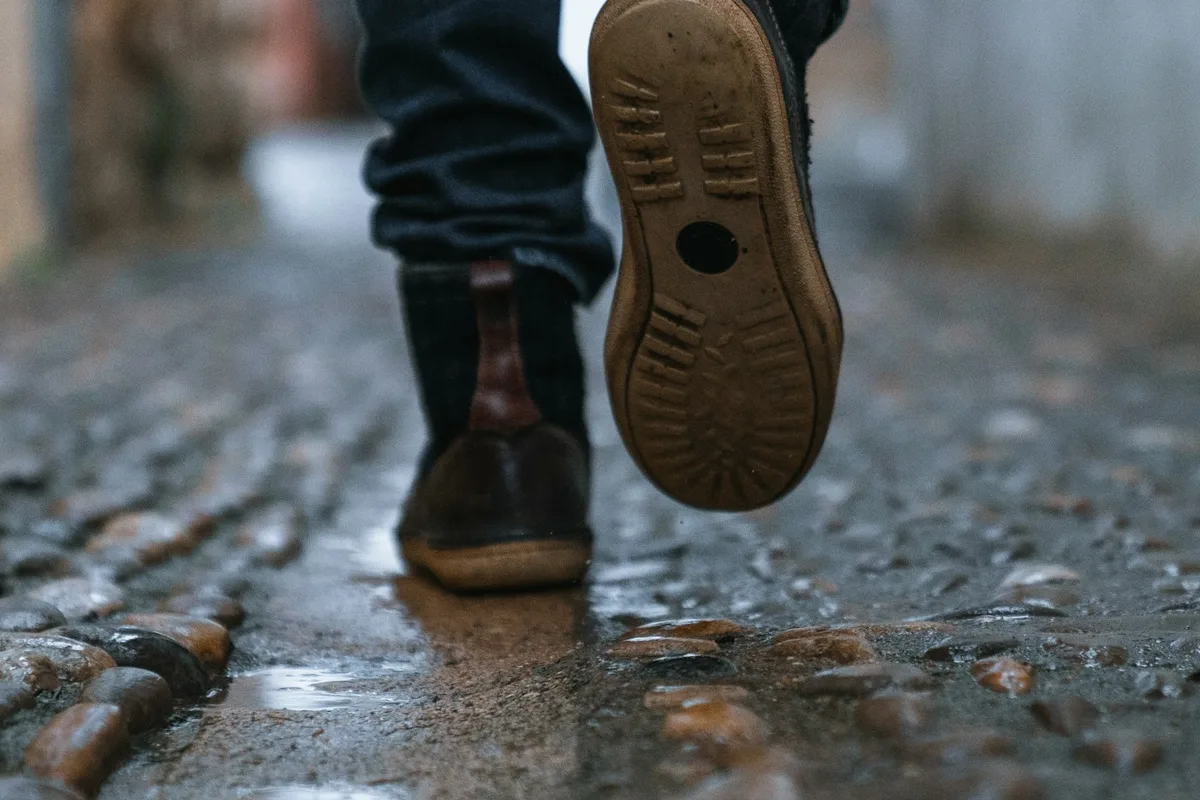
Look at tread as well as the upper. A textured sole gives you a useful detail to compare, but no footwear makes slippery paving risk free. Take particular care around wet leaves, polished entrances and smooth steps.
Match the upper to the weather
Breathable fabric can be pleasant on dry days and may dry more easily than a thick padded upper. It can also let rain in quickly. Leather needs care, while waterproof constructions may feel warmer and do not prevent water entering over the collar.
For a commuter, two suitable pairs rotated between wears may be more practical than one supposedly all-season pair. This is only worth buying if your existing shoes cannot already do the job. Let wet footwear dry away from strong direct heat and follow the manufacturer’s care instructions.
Make a careful buying decision
Compare product measurements where available, fastening details, materials and return conditions. If ordering online, test indoors on clean flooring and keep the labels until you are confident. A long indoor try-on with everyday clothes can reveal problems that a quick mirror check misses.
Set a budget before browsing. Spend for demonstrably better fit or useful construction, not simply for a fashionable model name. Removable insoles, repair options and replacement laces may matter more to your routine than an additional colourway.
Frequently asked questions
Is a heavier shoe more supportive?
Weight alone does not establish support or comfort. Compare fit and how the shoe behaves on your foot; an unnecessarily heavy pair can make an ordinary day feel cumbersome.
Can I use running shoes for errands?
Possibly, if they fit and suit the surfaces involved. Think about the activity they will actually perform rather than assuming every athletic shoe works identically.
What else helps an everyday outfit work?
A bag that carries comfortably can make the same walking day easier. Read choosing an everyday tote and use the capsule wardrobe guide to avoid buying shoes that only match one outfit.
Where to start browsing
Use the checklist above to compare suitable options. Check the current price, dimensions, materials and returns policy with the retailer before ordering.
Ordinary retailer links · no commission currently earned