Identify the room's biggest practical problem, test a new layout with existing furniture, then spend on the one change that will improve daily use.
Shopping note: the retailer links in this guide are ordinary links and do not currently earn us a commission. Read our Affiliate Disclosure.
In this guide
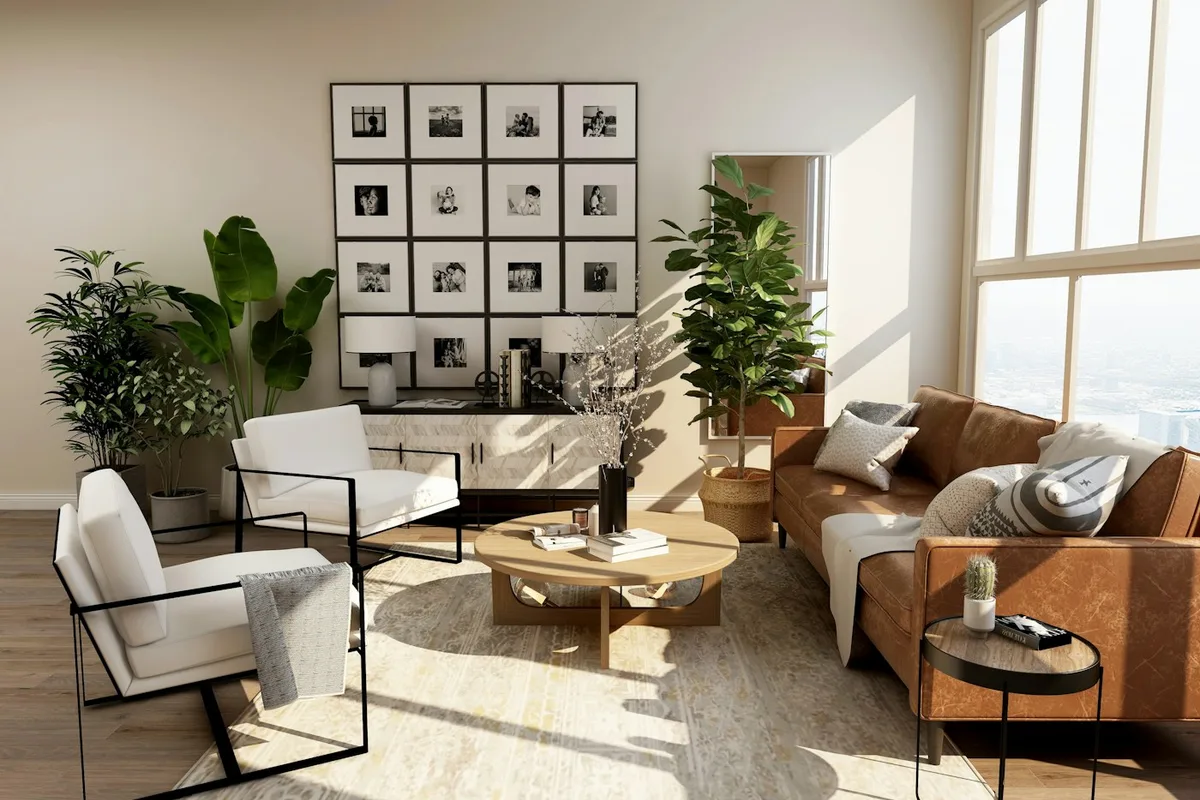
A living room can feel tired even when the furniture is perfectly serviceable. The problem may be a blocked walking route, harsh evening light or surfaces covered in items without a home. A useful refresh begins by separating those practical issues from the desire for a different colour scheme.
Choose a normal evening and notice where people sit, what they reach for and which parts of the room remain unused. Those observations can reveal improvements that a shopping basket will not. Rearranging a chair or moving a lamp may change the room more than another set of cushions.
Name the main problem
Write a specific sentence: “The chair is too dark for reading” or “There is nowhere to put a drink beside the sofa.” Avoid a broad brief such as “make it nicer,” which can justify almost any purchase. Decide which problem matters most before considering decorative choices.
Take photographs from the usual entrance and seated positions. They can help you notice crowded corners and visual imbalance. Use the photographs as a record of your own room, rather than expecting it to match a professionally styled interior with different dimensions and light.
Test the layout first
Measure furniture and mark alternative positions on a simple plan. Keep routes between doors and seats clear, and avoid placing furniture against heat sources where clearances are required. Check sockets, television sightlines and whether people can reach curtains comfortably.
Move manageable pieces safely, with help for heavy items. Try the new arrangement for a few days before buying furniture to fill apparent gaps. An empty corner is not automatically a problem; some open space makes the room easier to use and clean.
Compare small changes
| Change | Problem it may solve | Check before purchasing |
|---|---|---|
| Side table | Drinks and books have no landing place | Height, stability and walking clearance |
| Task lamp | A chair is difficult to read in | Light direction, cable route and controls |
| Cushion covers | Existing textiles feel visually tired | Actual insert size and care instructions |
| Rug | A seating group feels disconnected | Dimensions, door movement and slip risk |
Choose according to the room’s problem, not the order of items in a collection. A rug that looks right in a photograph can be awkward if its edge falls across the main route or it prevents a door from opening.
Work with existing colours
Look at the largest fixed elements first: flooring, sofa and curtains. Choose a small group of colours that sits comfortably with them. Bring fabric samples into the room if available and look at them during daylight and evening lighting before committing.
Do not assume every accessory must match exactly. Repeating one colour or material in a few places can create coherence without a complete set. If changing covers, confirm the fastening and washing requirements; practical care matters more than a perfect shade that is difficult to maintain.
Improve evening lighting
Use light where activities happen. A ceiling fitting alone may leave a reading chair dim while making the centre of the room feel harsh. Try moving an existing lamp and check for glare from the television or exposed bulbs.
Keep leads out of walking routes and follow electrical and product instructions. Fixed electrical changes should be handled appropriately by a qualified professional. Our reading corner lighting guide explains how to compare portable options without relying on appearance alone.
Spend where the change is noticeable
IKEA and John Lewis provide useful ranges to compare, but inspect dimensions, materials, assembly and delivery details for each item. Order only after checking the room and your budget. Large furniture deserves particular care because delivery, access and return arrangements can be significant.
Skip decorative purchases that create more tidying, cushions that make seating awkward and furniture bought to fill every gap. If storage is the problem, remove or relocate unused belongings before adding another cabinet. Similar principles apply to small hallway storage: furniture should support the space’s purpose.
Frequently asked questions
Do I need a new sofa for a different look?
Not necessarily. Layout, lighting and suitable textiles may change how the room feels while keeping a comfortable sofa.
Should I buy everything together?
It is usually easier to judge one change at a time. Living with it briefly can prevent unnecessary follow-up purchases.
Is a larger rug always better?
No. Choose dimensions that suit the seating arrangement and safe movement through your particular room.
Where to start browsing
Use the checklist above to compare suitable options. Check the current price, dimensions, materials and returns policy with the retailer before ordering.
Ordinary retailer links · no commission currently earned